Life with a dog in Charleston can be wonderful. There are farmers’ markets, dog-friendly patios, historic streets, and nearby beaches. All of that is much easier when your dog can walk calmly on a leash, listen in public, and relax when visitors come over. That is where the right training program makes day-to-day life smoother for everyone.
Not every option fits every dog or household. Some families love the structure of a weekly class. Others need focused help at home. Many busy Lowcountry owners choose an immersive board-and-train program so their dog can make faster progress with core manners. This guide explains what each option looks like, how to decide what you need, and when a personalized, balanced program, such as the one our trainers at Activate Canine provide, is worth the drive.
What Charleston Dog Training Really Needs to Cover
Charleston dog training has to handle more than simple tricks. Dogs here deal with horse-drawn carriages, crowds of tourists, golf carts, bikes, and busy sidewalks. Good training gives them a clear job in the middle of all that noise and motion.
For most local dogs, three skills make the biggest difference. A loose heel keeps walks from turning into a battle of strength. A reliable recall keeps beach and trail time safe and fun. A solid place command gives your dog a safe spot to rest when guests arrive or deliveries show up. Add calm sits and downs and polite doorways, and daily life in Charleston feels much more peaceful.
When these skills are taught with balanced, reward-first methods, dogs learn to enjoy the work. Programs like the board-and-train dog training services in Summerville at Activate Canine weave food rewards, praise, and play into every session. Over time, that foundation makes it easier to add tools and work through higher levels of distraction without overwhelming the dog.
Group Classes, Private Lessons, and Board and Train in Charleston
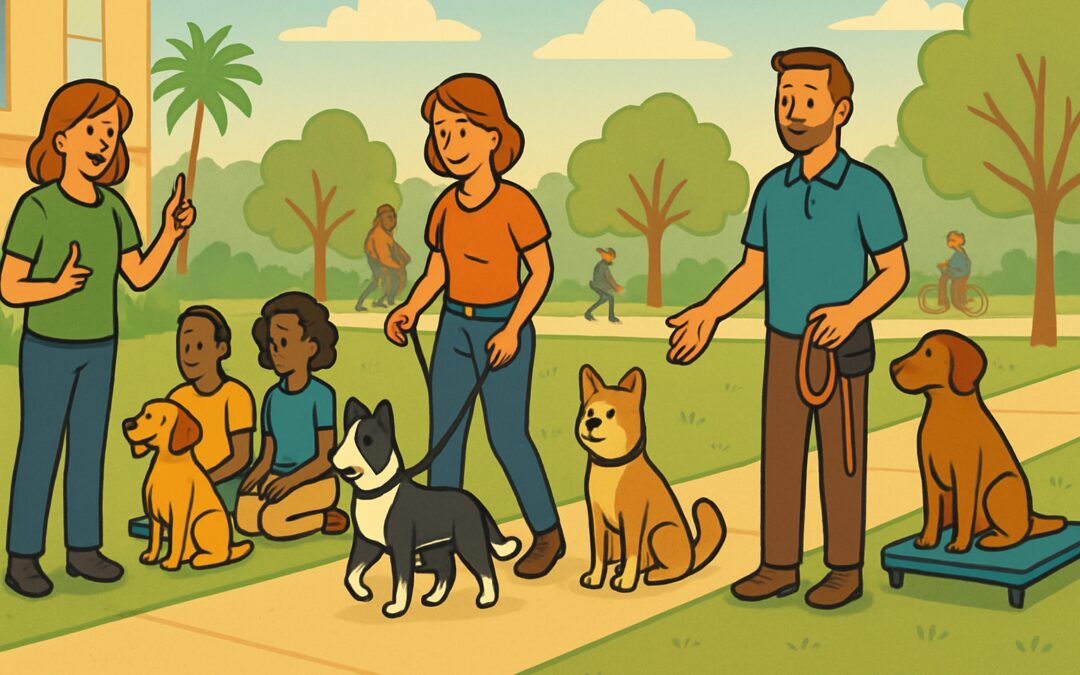
Most Charleston-area owners will see three main types of dog training programs. These are group classes, private lessons, and board-and-train. Each format has strengths and limits. The right choice depends on your dog, your schedule, and the complexity of the behavior issues.
Group dog training classes
Group classes meet on a regular schedule at a training center, park, or community space. A trainer leads the group through a set curriculum focused on basic obedience skills and simple manners while owners practice with their dogs.
Group classes are a good fit for social dogs that simply need structure and practice, and for owners who enjoy working in a group. Classes can give puppies safe exposure to new sights and sounds. They are less ideal for highly reactive or fearful dogs, or for serious aggression concerns, because the busy room can be overwhelming and there is limited time for one-on-one coaching.
Private dog training lessons
Private lessons focus on your dog and your household. A trainer meets you at home or at a public location such as a park or shopping center. You work together on specific goals, such as calmer greetings at the door, loose leash walking in your neighborhood, or better behavior around your children.
Private work is often the best choice for families with complex schedules or very specific behavior goals. The trainer can see the dog in their real-world context and design routines that fit your life. The tradeoff is that private lessons require steady practice between sessions. If that feels unrealistic, it may be worth exploring a more immersive format.
Board and train programs
Board-and-train programs provide your dog with a temporary home with a professional trainer. The dog lives with the trainer for a set number of days. During that time, the trainer works on core skills every day across a variety of locations and situations. This can jump-start progress on leash manners, recall, place, and calm behavior in public.
A well-run board-and-train operates with clear routines and plenty of rest between sessions. Dogs work indoors and outdoors and visit real-world locations once they are ready. At a place like Activate Canine’s board and train, that work is backed up by owner-first coaching and a lifetime support promise, so you are not left guessing once your dog comes home.
Board and train is especially helpful for busy households, new rescues with a lot to learn, and dogs with entrenched habits. It is also a smart option for families that want off-leash goals or help with reactivity.
Matching Your Dog and Lifestyle to the Right Program
Before you pick a training option, take an honest look at your dog and your routine. Write down your top three goals. Common examples include calmer leash walks, safer behavior around visitors, and better listening in public. Note any history of fear, anxiety, or aggression. Then take stock of your schedule and energy. Can you commit to daily practice at home, or do you need more of the heavy lifting done for you?
Group classes are a solid choice when your dog is social, your main goal is basic manners, and your schedule lines up with class times. Private lessons shine when you want tailored help with specific issues in your home or neighborhood. Board and train works well when your goals are bigger, your dog has a longer list of habits to change, or your work and family life make daily training difficult.
For many families, the best plan blends options. A dog might complete a board-and-train program, transition to private owner coaching, and later attend group events for extra practice. Trainers who offer a range of services, such as the dog training services Summerville families rely on, can help you map out that long-term path.
Understanding Dog Training Philosophies in the Lowcountry
Once you have a sense of format, it helps to understand training philosophies. In simple terms, you will hear three broad categories. Reward-based approaches focus on food, toys, and praise. Balanced training uses rewards first, then adds specialized equipment, such as a low-level e-collar, when a dog needs clearer guidance. Punitive styles rely heavily on physical corrections or fear to stop behavior.
Modern trainers in Charleston often move toward the middle ground. They use plenty of reward-based work to teach skills and build motivation. When needed, they layer in tools that allow for precise communication. At Activate Canine’s balanced, reward-based program, the team keeps sessions upbeat while still setting clear boundaries.
As you compare options, ask each trainer to explain how they introduce tools, how they teach owners to use them, and how they help nervous dogs feel safe. A good trainer will answer in plain language and offer clear follow-up support. The AKC guide to board and train programs offers more questions you can keep in mind as you research.
Dog Training Options for Summerville, Mount Pleasant, and Goose Creek
Charleston is the hub for many Lowcountry dog owners, but plenty of families live in surrounding communities such as Summerville, Mount Pleasant, and Goose Creek. For them, commute time and traffic play a big role in training choices.
If you live near Summerville, access to structured programs such as the obedience and leash training services with Activate Canine is a major advantage. You can combine in-person work with owner coaching and ongoing refreshers. Owners in Mount Pleasant or Goose Creek may decide that a board-and-train stay is worth the drive when they want faster progress and clear guidance on what to do at home.
When to Choose a Personalized, Balanced Dog Training Program
Some situations call for a highly personalized plan rather than a standard class. Dogs with aggression or intense reactivity around people or other dogs need careful setups. High drive breeds, such as shepherds and working mixes, often do best when they have a clear job and a consistent structure. Households with children, new babies, or frequent visitors also benefit from guidance that takes their full routine into account.
A personalized program with a balanced, reward-first approach gives these teams a clear path forward. Dogs get fair, consistent rules and plenty of positive reinforcement. Owners learn exactly what to do at home, in the neighborhood, and on trips to places like the Summerville Farmers Market or Azalea Park. At Activate Canine, that support includes regular updates during a board-and-train stay, owner-transfer lessons, and ongoing refresher sessions for graduates.
Take the Next Step Toward Reliable Charleston Dog Training
Choosing a dog training program can feel confusing at first, but you do not have to sort it out alone. Once you understand the main formats and philosophies, it is easier to see what fits your dog and your life.
If you are ready for calmer walks, safer greetings, and a dog you can enjoy at home and around Charleston, the next step is a conversation. Reach out to a balanced, reward-based trainer such as Activate Canine, schedule a consult, and start building the skills that make Lowcountry life easier for both ends of the leash.