Charleston is a puppy paradise, and the first weeks set the tone for life. From shaded lanes in Summerville to breezy docks downtown, you will find patios, parks, and markets that welcome a well-mannered pup. This guide gives you simple steps that fit Lowcountry life. You will learn why early socialization matters, how to build a reliable bathroom routine, and how to shape easy manners in public. We also explain when to choose group classes, private coaching, or a short board and train. Families searching for puppy training charleston sc get a practical plan here that works in real homes, on real sidewalks, and at real markets.
Schedule a consultation or visit the Activate Canine Dog Training Services overview to see programs and availability.
Why early socialization matters (8 to 16 weeks) and puppy classes Charleston
The socialization window runs through roughly 8 to 16 weeks. During this period, positive exposure shapes how your dog handles the world later. Pair new sights and sounds with treats and space. Keep sessions short and end while your puppy is still happy. Ask your veterinarian about vaccine timing for safe outings and for local disease risk. Choose calm, clean places first, then add mild distractions. Well-planned early experiences reduce fear and frustration as your dog grows. Authoritative veterinary groups, including the American Veterinary Society of Animal Behavior, encourage early, well-managed socialization alongside your vet’s vaccine guidance.
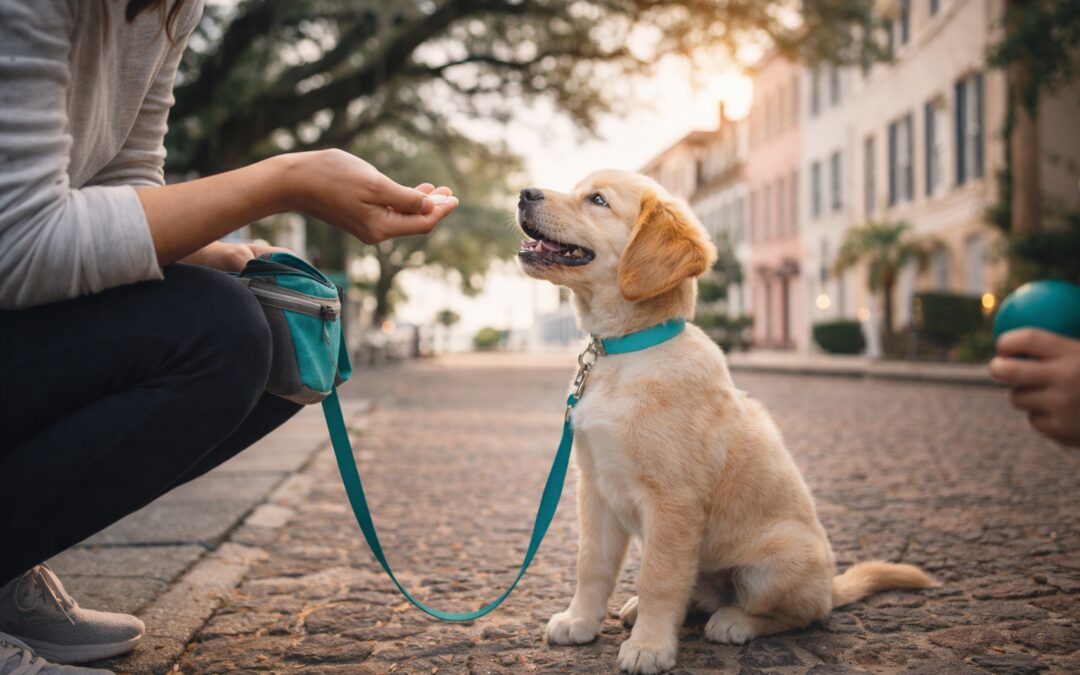
Lowcountry exposure ideas include carriage horses at a distance, seagulls near the pier, rolling carts, bikes, kids with scooters, and light outdoor music. If you prefer structured support, puppy classes Charleston can be a good match once your vet clears you. Look for small class sizes, clear coaching for owners, and a trainer who welcomes questions. Ask about handling practice, consent cues, and simple games you can use at home and on walks. You can also browse local education resources from the Charleston Animal Society.
Learn more about our philosophy and see our Obedience program.
House-training, crate rhythm, and sleep
Start a simple loop. Eat, go outside, rest. Young puppies need many trips outside. Take them out after naps, after meals, and every couple of hours while awake. When they eliminate outside, mark the moment with a cheerful “yes” and reward near the spot. If you catch an accident starting indoors, interrupt gently, take your puppy outside, and reward if they finish there. Do not punish after the fact. It confuses dogs and slows learning. Many veterinary guides recommend frequent, consistent trips and calm redirection rather than punishment.
Treat the crate as a safe den. Feed a few meals in the crate with the door open, then close the door for short, calm rests. At night, set one or two quiet alarms based on age and progress. Move the crate close to your bed for the first week to reduce stress, then shift it to your preferred spot. In hot months, add water breaks and shade, and watch for signs of heat stress. Apartment dwellers can stage a fast elevator exit by carrying a small puppy to a consistent outdoor toilet area. In single-family homes, station a light by the back door and keep a leash there for quick, quiet potty runs.
See Obedience services or schedule a consult.
Polite greetings, nipping, and chewing management
Jumping and nipping are normal puppy behaviors. Replace them with better habits. First, teach “four on the floor.” Step on the leash so the clip rests near the collar. Approach slowly and reward when all four paws stay down. Next, teach hand targeting. Present your palm near your puppy’s nose. When they touch it, mark and treat. Use that target to guide calm greetings. For nipping, redirect to a toy, then trade for a treat to end the game. Add enrichment daily. Offer safe chews, food-stuffed toys, and simple puzzle feeders to lower frustration and keep mouths busy.
For chewing prevention, manage the environment. Pick up cables, shoes, and kids’ toys. Confine with gates when you cannot watch closely. Rotate legal chew items to keep them interesting. For families with toddlers, create a puppy-free zone and a kid-free zone to protect both species. Practice a “settle on a mat” near the couch for a few minutes each evening. That habit makes movie night peaceful. If your household includes kids, plan simulated greetings with a trainer. Practice doorbell drills, treat tosses to a bed, and a “place” cue before guests enter. That pattern helps a puppy shift from chaos to control.
Explore Leash Training and read a few client testimonials.
First cues: name game, sit, place, come
Keep sessions short and upbeat. Use a marker word such as “yes” to label the exact behavior you like. For the name game, say the name once, wait for eye contact, then reward. For sit, lure up and back, then fade the lure quickly. For place, guide your puppy to a bed, mark one second of calm, and release. Build duration in tiny steps. For recall, start indoors on a six-foot leash, then a light long line outside. Say the cue once, back up, and reward heavily when your puppy reaches you. End while your dog is eager for more, not tired of the drill. The AKC’s beginner guides are a helpful refresher as you practice.
As focus grows, layer in mild distractions. Walk past a toy on the floor and reward yourself for choosing you. Ask for a brief rundown on a mat while you set the table. Add one new location each week. Practice patio skills at home with a place during meals and short chats with a neighbor. When ready, try a quiet outdoor table for five to ten minutes. Bring a chew, water, and your puppy’s bed. Your goal is many short wins, not one long outing.
Leash manners for sidewalks and markets
Walks should feel easy. Start with a clear position at your side and a loose leash. Reward attention to you every few steps. If your puppy forges ahead, stop, call them back to your side, then move again. Add an “attention game” near mild distractions, such as a quiet street. In crowded places, keep a distance from other dogs and strollers, and give your puppy time to look and then reorient to you. If your pup is worried, step away and let them breathe. Practice market etiquette by keeping food displays off-limits and giving your dog space. The Charleston Farmers Market vendor manual has pet rules that ask handlers to keep dogs close, out of food areas, and under control.
Plan routes with weather in mind. Summer heat can hurt paw pads. Test the pavement with your hand. If it is too hot for you, it is too hot for a puppy. Choose shade and cooler times of day during peak months. On beach days, follow posted rules for leashes and hours, such as Folly Beach’s beach rules and Charleston County Parks’ pet guidance. Carry fresh water and rinse salt or sand from paws when you leave. Keep sessions short until your puppy walks calmly on a loose line in familiar areas.
Explore Leash Training or add structured outings through our dog-walking service. Check local market and park rules before you go.
Local socialization checklist
Use this list as a menu. Keep sessions brief. Bring high-value treats. End on a win.
- Watch carriage horses from a safe distance
- Walk near seagulls by a pier or waterfront
- Ride an elevator for one floor
- Sit in a parked car with light street noise
- Hear outdoor music at a low volume
- Walk by shopping carts and rolling coolers
- Step on different surfaces such as wood, brick, and gravel
- Pass a few bikes and scooters with space
- Visit a friend’s porch for a short hello
- Practice polite waiting at a crosswalk
- Walk near a playground fence during a quiet hour
- Stand on a scale at your vet’s lobby during a calm time
Read about our approach and browse the services hub.
Puppy Training Charleston, SC: When to choose class, private, or board and train
Each format solves a different problem. Group classes are budget-friendly and great for focus around mild distractions. They work well for stable puppies and for owners who want weekly homework. Private lessons fit families with tight schedules, specific goals, or shy puppies that need space. Board and train is efficient when you want jump starts on leash manners, place, and recall without losing momentum to a busy week. The best choice depends on age, behavior, and how much time you can practice between lessons.
Activate Canine blends balanced, reward-based methods with owner-first coaching. We teach clear communication and back programs with lifetime refreshers for active clients. If your calendar is packed, we can maintain gains between lessons with professional walks. For many families, a sequence of two to four private lessons followed by a short board and train gives the fastest, most reliable result. If you want a national chain option for price and schedule comparison, review Petco’s Charleston training classes.
Compare our Obedience, Leash Training, and Packages. Ready to act on puppy training in Charleston, SC, today? Schedule your consultation.
FAQ
- When should I start formal training?
You can begin simple name and reward games right away. Many puppies are ready for structured outings after the first round of core vaccines and a vet green light. Early, safe social contact is linked with fewer behavior problems later in life. - How many minutes per day should I train?
Aim for three to five micro sessions of two to five minutes. Short sessions fit family life and keep learning fun. - Are treats mandatory?
Food is the fastest way to build clear feedback. You can also use toys and praise. Fade food slowly as habits become reliable. - Is an e-collar ever appropriate for puppies?
We do not use e-collars on very young puppies. As dogs mature, gentle, low-level e-collar work can help off-leash reliability when taught by a professional and when owners consent. - What if my puppy is shy?
Work below threshold. Add space, slow the pace, and reward any curious glance at a new sight or sound. Private lessons can help you set up easy wins.
Contact us with questions or read client stories.
Book your Lowcountry puppy consult
We offer a free phone consult and a simple next-step checklist. Bring vaccine dates, favorite treats, and a list of daily routines. Our service radius covers Summerville and the greater Charleston area, with pickup available for select board and train enrollments. Calm walks and easy manners start with a plan. We are happy to answer quick questions.
Schedule your consultation to get matched to the right program