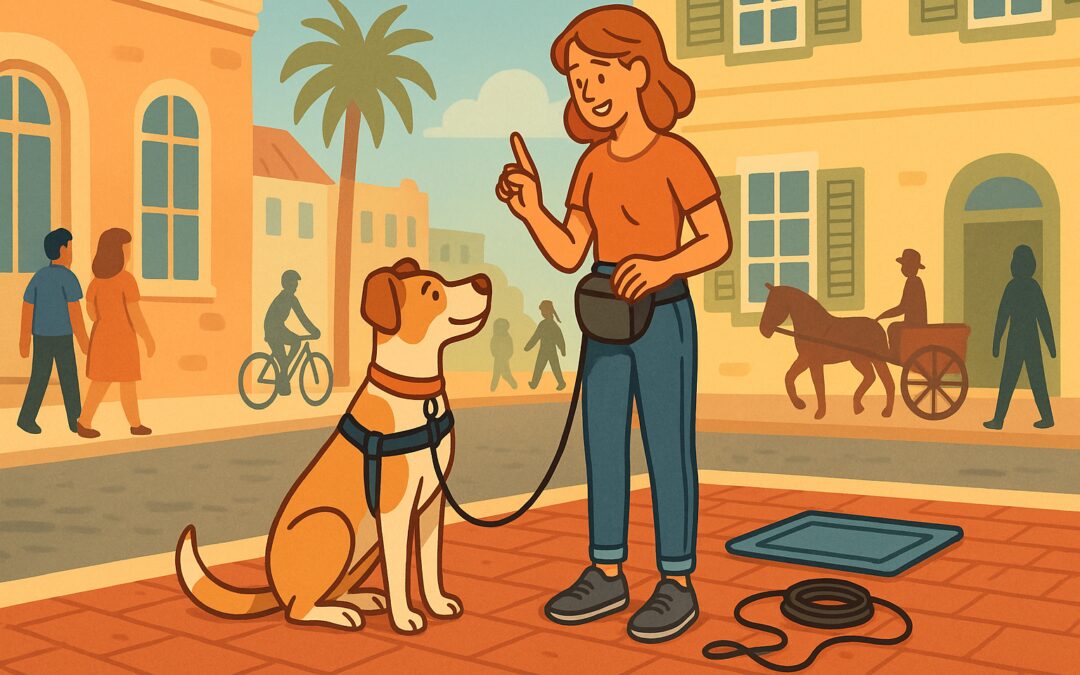
Life in Charleston gives dogs plenty to get excited about. There are narrow sidewalks packed with visitors, horses and carriages downtown, busy neighborhood streets, and beaches that fill up fast once the weather is warm. All of that energy is fun to share with your dog when you know they will listen, walk politely, and come when called.
That kind of predictability does not happen by accident. It is the result of clear, consistent dog obedience training in Charleston, SC that fits your dog and your lifestyle. In this guide, you will see which obedience skills matter most here, how to proof them around real-world distractions, and how to choose between group classes, private lessons, and immersive board-and-train programs. You will also see how a balanced, reward-first approach such as Activate Canine’s makes it easier to build reliable behavior that lasts.
Dog Obedience Training in Charleston, SC: Essential Cues
Obedience is not about making your dog a robot. It is about giving them simple, well-practiced jobs so they know what to do in busy situations. For most Lowcountry families, a handful of core cues cover almost everything they face day to day.
- Sit and down keep your dog in one spot while you talk with neighbors, pay for a coffee, or wait at a crosswalk.
- Stay holds that sit or down until you release your dog, which prevents creeping forward when doors open or visitors arrive.
- Heel keeps the leash loose on tight sidewalks so you are not dragged toward every distraction.
- Recall brings your dog back to you, whether you are at a county park, a beach, or your own front yard.
- Place sends your dog to a bed or mat to relax instead of pacing, jumping, or begging during busy moments at home.
When these cues are trained with high-value rewards and clear structure, dogs learn to offer them happily. Balanced, reward-first programs like the obedience-focused board-and-train packages in Summerville build these basics indoors, then take them on the road to places such as Azalea Park and the Summerville Farmers Market once dogs are ready. That step-by-step approach turns simple obedience into skills your dog can actually use in Charleston life.
Proofing Obedience Around Markets, Horses, and Beaches
Many dogs can sit and stay in the living room. The challenge comes when you walk onto King Street on a Saturday afternoon, pass a carriage horse, or step onto a busy dock. Proofing means teaching your dog to follow familiar cues even when the world around them is much more distracting.
Start by taking obedience skills to easier public locations, such as a quiet corner of a park or a less crowded time at a local shopping center. Practice heel, sit, and down at a distance from the action so your dog can stay focused and earn rewards. Over time, move a bit closer to things that trigger excitement, such as other dogs, skateboards, or children playing. If your dog gets overwhelmed, step back to a calmer spot and give them a short break.
Local leash rules make this more than a courtesy. Charleston and surrounding cities require dogs to be leashed or under control in public areas, and county parks specify when and where off-leash privileges are allowed. Following those rules keeps everyone safer and protects your dog’s access to favorite places. City and county resources, such as Charleston County Parks pet guidelines, are good references as you plan practice sessions.
Choosing Group, Private, or Board-and-Train Obedience
Once you know which skills you want, the next step is choosing the right format for dog obedience training in Charleston, SC. Most owners will decide between group classes, private lessons, and board-and-train.
Group obedience classes work well when your dog is social, your main goals are basic manners, and your schedule lines up with class times. You join a small group of teams and follow a set curriculum that covers foundations such as sit, down, heel, and stay in a shared space. You get built-in distractions from other dogs and people, which helps with proofing, but there is limited time for one-on-one coaching. Intense reactivity or aggression is usually better handled in a different setting.
Private obedience lessons bring the trainer to you at home or at agreed-on public locations. This format shines when you have a specific wish list, such as calmer greetings at the front door, better behavior around children, or more focus in your own neighborhood. It also suits owners with complex work schedules, since appointments can be more flexible than class times.
Board-and-train obedience programs give your dog a temporary, structured stay with a professional trainer. At a program like the flagship board-and-train options at Activate Canine, dogs rotate through multiple short training sessions and rest periods each day, practicing leash manners, recalls, place, and house rules in a variety of settings. Afterward, owners complete transfer lessons so they understand how to keep those new skills sharp at home. This immersive format is especially helpful for busy families, dogs with longer histories of pulling or ignoring cues, and owners with ambitious goals such as off-leash reliability.
How Long Obedience and Off Leash Obedience Take in Charleston
Every dog is different. Breed, age, history, and household all change how quickly skills move from “brand new” to “automatic.” Still, it helps to think in weeks and months rather than days.
Many families see noticeable changes after a few focused weeks of work, whether that comes from a board-and-train stay or a series of private sessions. Basic skills such as sit and down can become reliable at home fairly quickly. Loose leash walking and recall usually take longer because they must hold up against stronger distractions. True off leash obedience in exciting places, such as local beaches and trails, often requires several phases: on-leash foundations, long-line practice, higher distractions on leash, and only then controlled off-leash testing where rules allow. Off leash obedience also depends on thoughtful practice around local leash rules and beach schedules so your dog stays welcome in favorite spots.
A simple weekly plan keeps things realistic. Aim for several short sessions at home most days, plus one or two outings each week where you practice heeling, recalls, and place work in public. Trainers who offer lifetime support, such as the Summerville dog training specialists at Activate Canine, make it easier to revisit skills in the months after a program if you hit a rough patch or your routine changes.
Training Tools for Safe, Humane Obedience
Modern dog obedience training in Charleston, SC does not rely on force. Most reputable trainers start with food rewards, toys, and praise to teach new behaviors. As dogs progress, some will introduce specialized tools that give clearer feedback and help dogs make better choices around heavy distractions.
At Activate Canine, that looks like a balance based, reward-first system that pairs generous rewards with low-level e-collar cues and other humane tools when appropriate. The goal is crystal-clear communication rather than punishment. Dogs still earn treats and praise for correct choices, and tools simply make it easier to keep leash pressure light and recall responses consistent once you leave the living room behind.
Responsible trainers will explain every tool they use before you agree to a program. They invite owners to feel an e-collar at the levels used on dogs, demonstrate how and when it comes into play, and clarify what equipment your dog will go home with. If a trainer refuses to answer those questions or relies heavily on harsh physical corrections, that is a sign to keep looking.
How to Choose an Obedience Trainer You Can Trust
The right trainer is as important as the right format. A good match leaves you feeling informed, supported, and hopeful instead of confused or pressured. A simple checklist can help:
- Look for clear information about philosophy, tools, and approach on the trainer’s website and during consult calls.
- Ask how they coach owners, not just dogs. Obedience that holds up in Charleston comes from both ends of the leash learning together.
- Ask about real-world proofing. Do they practice around markets, parks, and downtown areas once dogs are ready, or only in a quiet training room?
- Confirm what kind of follow-up support is included, such as written homework, video examples, or refresher lessons.
Balanced, reward-first trainers like Activate Canine build their programs around owner education and long-term support. They offer structured board-and-train stays, targeted coaching for leash manners and aggression cases, and ongoing maintenance options for graduates who want tune-ups or extra field trips. That mix makes it easier to maintain obedience behaviors through busy seasons, schedule changes, or new environments.
National organizations such as the American Kennel Club also provide helpful context about what to expect from basic and advanced obedience, along with additional questions you can keep in mind as you compare programs.
Take the First Step Toward Reliable Obedience
Dog obedience training in Charleston, SC is not just about checking off commands on a list. It is about building habits that make life safer and more enjoyable in a busy coastal city. When your dog can heel past distractions, rest on a place bed when guests arrive, and come when called, you can include them in more of your world.
If you are ready for calmer walks and more predictable behavior, start with a conversation. Reach out to a balanced, reward-first trainer such as Activate Canine, schedule a consultation, and map out a plan that fits your dog, your schedule, and your favorite Charleston adventures.